
Searching Hancock County Criminal Dockets
Begin at the official West Virginia Court Record Access gateway. Pick MCRSearch for a Hancock County Magistrate Court matter. Pick WVPASS for a Hancock County Circuit Court case. The free Magistrate Case Record Search takes a name or a case number. It asks for no registration. WVPASS does not publish a clear field list. So let its current screen be your guide.
Search with the full case number when you have it. A name alone can pull the wrong record. Verify Hancock as the case location. Also check the filing date, the charge, the event list, and each party's role. If the online route fails, call or visit the proper clerk. For a municipal ordinance charge, go to the city clerk instead.
- Identify Circuit, Magistrate, or municipal jurisdiction.
- Open the matching official search route.
- Enter the exact number, or the full name in MCRSearch.
- Compare location, charge, and event schedule.
- Ask the custodian for a copy or certification.
Hancock Criminal Dockets Split Courts
Where a case stopped decides your fallback. A felony complaint may never get past the preliminary stage. Its useful public history may stay in Magistrate Court. A bound-over matter may need both the Magistrate number and the later Circuit number. When you ask a clerk to trace that path, come prepared. Bring the defendant name, an approximate filing date, the charge type, and any number printed on a notice. Those details narrow the request so staff can actually help.
A felony can leave records at two levels. Magistrate Court takes the complaint, first appearance, bail, and preliminary hearing. Once a case is bound over, a separate Circuit record begins. The two dockets are related, but they may carry different case numbers.
Misdemeanors and state traffic charges can stay in Magistrate Court. Circuit Court holds the felony trials and appeals. A local ordinance violation follows city-controlled paths instead. That split is why one portal sometimes returns nothing.
| Court | Criminal work | Access |
|---|---|---|
| Circuit | Felony trials, appeals | WVPASS or clerk |
| Magistrate | Misdemeanors, felony preliminaries | MCRSearch or clerk |
| Municipal | City ordinance charges | City clerk |
Note: An arrest record is not the court docket.
Inside a Hancock County Criminal Docket
A public Magistrate result can show a lot. It covers the court location, the parties by role, scheduled events, and the docket entries themselves. Expect each entry to carry a filing date, a short code, a description, and the filer. The event block may list the hearing type, date, time, room, judge, and why an event closed. On the Circuit side, entries can include an indictment, arraignment, motions, plea, judgment, and sentence.
Remember that a document list is not the document. Some images stay unavailable, and protected details may be redacted. Read the code next to its description instead of guessing. The clerk can validate an entry. The clerk can also hand you the filed paper when it is public.
| Case number | Local ID; payment examples include ##-M##X-#####. |
|---|---|
| Charge | Offense and classification when shown. |
| Case event | Type, time, room, judge, closure reason. |
| Docket entry | Date, code, description, filer. |
| Disposition | Plea, dismissal, acquittal, conviction, or other outcome. |
Read Hancock Criminal Case Events
The official MCRSearch case-detail interface keeps events and docket entries separate. It can hold past hearings. It can hold future ones too. The newest future event not marked closed is a fair starting point. It still does not replace the latest order or a word from the clerk.
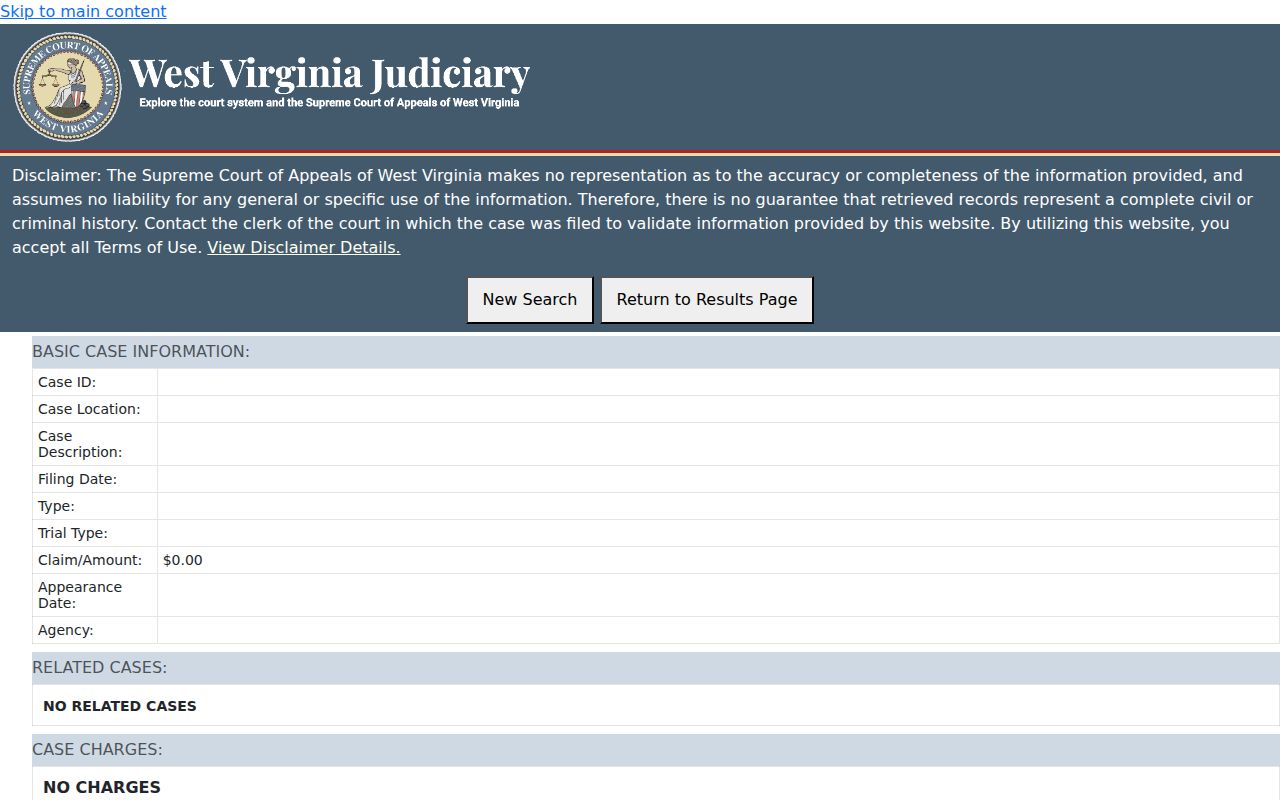
The split matters when you read a record. An event schedules activity. An entry records a filing or an action. A closed event does not prove the criminal case ended, so treat it as one clue among several. Also keep private names and birth dates out of anything you republish.
Check the sequence. Read the charge, latest open event, and disposition together.
How a Criminal Case Moves
Transfers matter here. The First Judicial Circuit covers Brooke, Hancock, and Ohio Counties. Check the case location shown in the result. Do not just trust a familiar judge or attorney name. A hearing can also move without the case number changing. When the event list and an older mailed notice disagree, do not guess. The most recent order and the assigned clerk are your best sources.
The record begins with a complaint, affidavit, warrant, indictment, or information. From there the docket may log an initial appearance, bail, counsel, and a preliminary hearing. A felony that starts in Magistrate Court can be bound over into a Circuit phase. That phase brings arraignment, discovery, motions, and pretrial settings.
A plea or trial may not finish the case. Sentencing, costs, restitution, probation, commitment, bond action, or an appeal can still follow. Read the entries by date. Note which court issued each one.
Docket flow: Filing › Arraignment › Pretrial › Plea or Trial › Disposition › Sentencing
Hancock Criminal Docket Outcomes Differ
Outcome words are not interchangeable. A plea records a response. A conviction or judgment records a legal result. Acquittal means no conviction after trial, and dismissal ends the matter under the order's terms. Nolle prosequi means the prosecution was discontinued. A deferred disposition holds a final result subject to conditions.
Other entries describe process, not guilt. A warrant demands action or appearance. Bond forfeiture concerns bond compliance. An appeal requests review and does not erase the lower-court history.
- Bound over
- A felony matter moves toward Circuit Court.
- Disposition
- The recorded outcome, read with the order.
- Continuance
- A setting moves to another date.
- Restricted
- Public display is limited.
Note: “Case closed” may not explain each charge.
Courts That Hold Criminal Dockets
Mail works when a trip to the courthouse does not. Send the request to the right post-office box. Or call ahead to ask whether an older file must be pulled first. The clerk can confirm what facts to include. The clerk can also confirm which payment forms are accepted, and whether certification or postage changes the total. Hancock County has no confirmed criminal-copy email or drop-box channel, so skip those. Never send private identifiers through a channel the court has not verified.
Felony files live with the Circuit Clerk. The Hancock County Circuit Court clerk sits at 102 Court Street in New Cumberland. That office handles old felony files, certified judgments, sentencing orders, and appeals. Mail requests go to P.O. Box 428. Call 304-564-3311 for current instructions and cost.
For misdemeanors and complaints, try the Magistrate Court clerk at 900 North Chester Street. The phone numbers are 304-564-3080 and 304-564-3355, and mail goes to P.O. Box 626. One wrinkle: ordinance charges from Weirton, Chester, and New Cumberland stay with the city. They move only if they were filed in county court.
Circuit Clerk
102 Court Street
New Cumberland, WV 26047
304-564-3311
Magistrate Clerk
900 North Chester Street
New Cumberland, WV 26047
304-564-3080 or 304-564-3355
Hancock Treatment Court Docket Route
Hancock treatment court has a clear entry point. The First Circuit Northern Panhandle Drug Court covers Brooke, Hancock, and Ohio Counties. It began in 2005. It can run before a plea, after a plea, or after a probation violation. Tracking usually stays tied to the underlying criminal case number rather than a separate public drug-court number. That case number is the key to use in any docket search.
Status and review hearings can sit among ordinary criminal docket events. Program records may carry access limits even when the underlying case stays public. Juvenile Drug Court is different, since juvenile records are confidential. So a docket entry showing a review event does not promise access to those papers. Assessments, treatment reports, and participation files may all stay closed.
Hancock Criminal Docket Copy Requests
A good copy request names the court and the case number. It also gives the entry date and the document you want. Say whether you need inspection, a plain copy, or a certified copy. The Circuit Clerk supplies Circuit files. The Magistrate Clerk handles Magistrate documents. If a city ordinance case never entered county court, the municipal clerk keeps the record.
Copy fees vary by court and format. Magistrate Rule 11 sets twenty-five cents per photocopy page and two dollars per fax page. Circuit pricing shows a conflict between an older county price and the current statute. So ask for a total before sending payment. A mailed request should include contact details. Add delivery instructions and current payment directions. Old paper or archived files may take longer to retrieve.
Hancock Criminal Filing Snapshot
The judiciary's 2024 report puts the Hancock Circuit criminal docket in perspective. Hancock recorded 55 felony filings and two Magistrate appeals. The Circuit table lists no misdemeanors and 55 other criminal cases. The total was 112. Count filings, not people; these are new cases, not convictions or pending matters.
Most criminal work starts lower, at the Magistrate level. Misdemeanors and felony preliminary matters are heard there. Filing totals explain why court level matters in a case lookup. They say nothing about any single case's outcome.
Sealed Dockets and Public Access
Public access is not the same as permission to republish sensitive details. A docket result may show party roles and limited case data. Meanwhile a document image or protected identifier stays suppressed. Use the public entry to find the proceeding. Then request only the nonconfidential record you need. The custodian can explain what an unavailable record reflects. It may be sealing, confidentiality, expungement, archive coverage, or the wrong court route.
Plenty of material may be absent or restricted. That includes sealed records, expunged matters, juvenile files, abuse-and-neglect records, and protected details. A missing result has other explanations too. The case may be old, municipal, filed under another number, or not yet posted. Absence does not prove no record exists.
Rule 15A governs electronic dockets and access to nonsealed, nonconfidential e-file records. Ask which rule, statute, or order limits access, and whether a redacted copy remains available.
Key rules:
Trial Court Rule 15A defines the electronic register and public access.
West Virginia Code §51-4-2 addresses court-record inspection and copies.
West Virginia Code §29B-1-3 states general inspection rights, subject to exemptions.